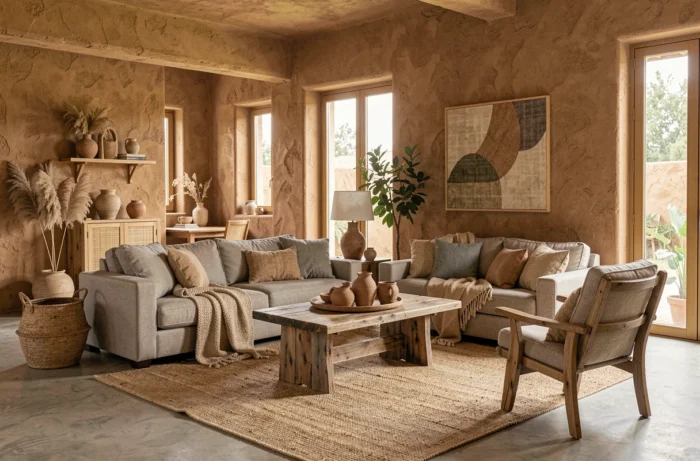
Eco-friendly interior decoration is no longer a niche segment reserved for purists. Trend analyses for 2026 confirm that sustainability has become a central purchasing criterion for furniture and decorative objects, including in the mid-range market. What concrete choices allow for a modern interior with a reduced footprint? Here are ten ideas that go beyond the usual advice on recycled wood or eco-friendly paints.
1. Raw earth plaster to replace traditional plaster
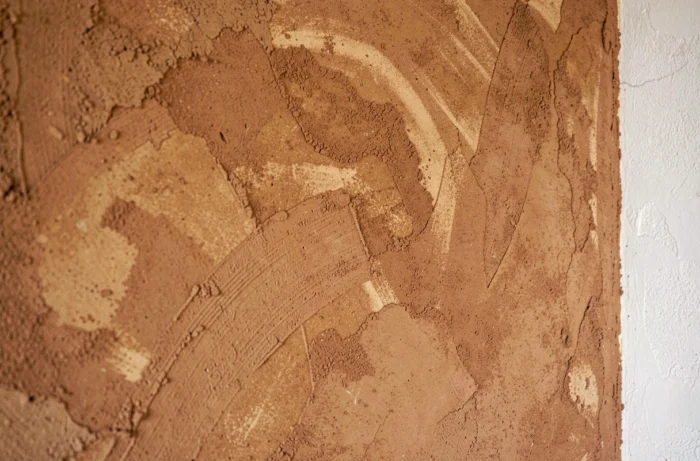
Raw earth plaster naturally regulates the humidity of a room and emits no volatile organic compounds. Applied to an accent wall in a living room or bedroom, it adds a raw texture that fits perfectly within the earth palettes (burnt ochre, clay brown, warm beige) dominant in 2026.
Its application requires a clean surface and a longer drying time than synthetic plaster. However, its lifespan far exceeds that of standard paint, which offsets the initial cost.
2. Woven hemp fiber light fixture
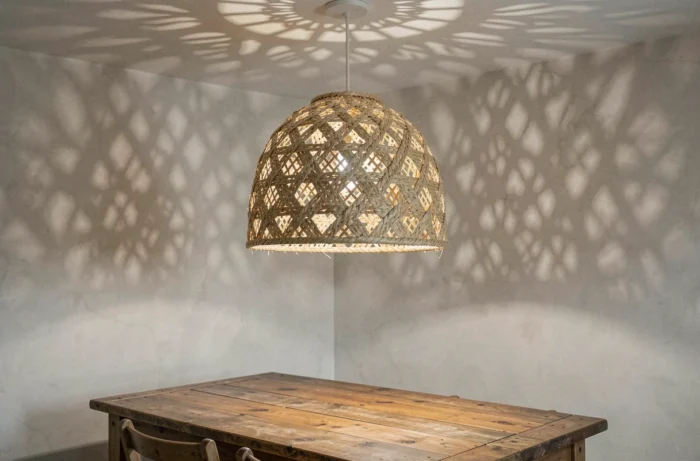
Hemp grows without pesticides and requires very little water. Woven into a pendant or lampshade, it diffuses a soft, filtered light that softens living spaces. Several French workshops offer artisanal models that combine raw hemp with a structure made of recycled metal.
To explore other options of this type, the decor on Maisons Alternatives brings together concrete approaches that blend natural materials with contemporary design.
3. Reclaimed travertine as a coffee table top
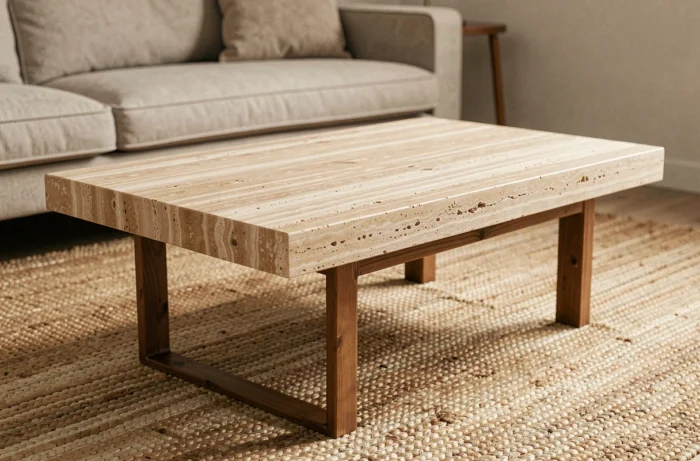
Travertine is one of the raw materials that is gaining prominence in modern decor. Instead of buying new travertine, construction scraps or reclaimed slabs can serve as a top for a coffee table or console. Each piece features unique veining, ensuring a one-of-a-kind piece of furniture.
Reclaimed travertine costs significantly less than new and avoids the extraction of new resources. A simple sanding and treatment with linseed oil are enough to restore it.
4. Unbleached thick linen curtains
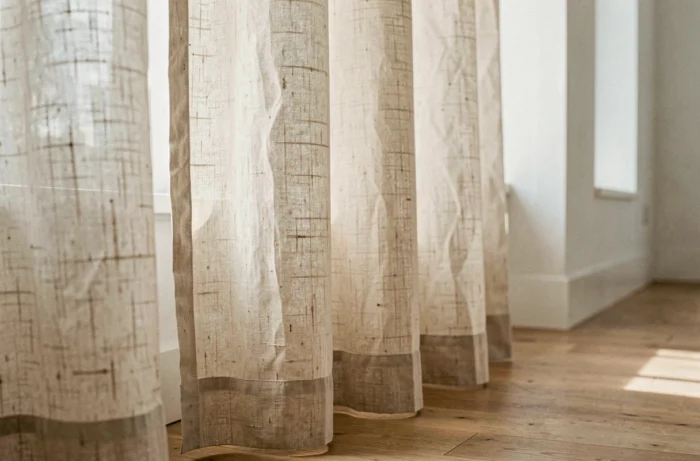
Linen grown in Europe (mainly in France and Belgium) remains one of the least water-intensive textile fibers. A thick unbleached linen curtain filters light without blocking it, reducing the need for artificial lighting during the day.
Its natural shade, between ecru and greige, pairs well with earth palettes and light woods. Unbleached linen eliminates the chemical dyeing step, further reducing the textile’s footprint.
5. Wall shelf made of reclaimed wood with visible fixings
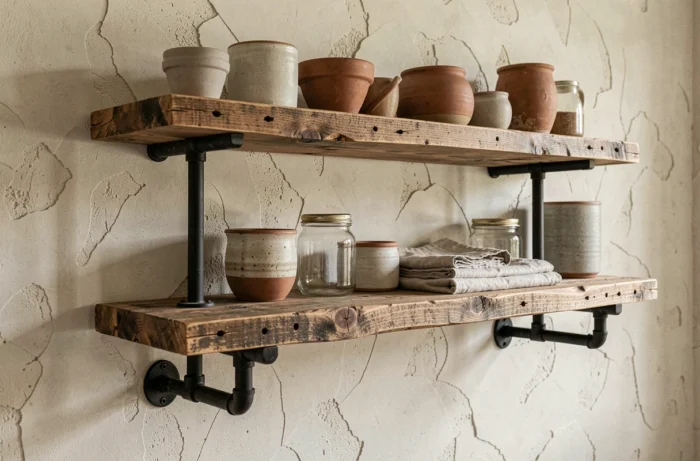
The reuse of wood (formwork boards, old beams, parquet slats) allows for the creation of wall shelves with a strong character. The visible metal fixings, made of raw steel or cast iron, add an industrial contrast that modernizes the whole.
This type of furniture is easily made in DIY. The main issue is to ensure that the reclaimed wood has not been treated with toxic products, especially consigned pallet wood (marked MB, treated with methyl bromide).
6. Homemade poured terrazzo for furniture tops
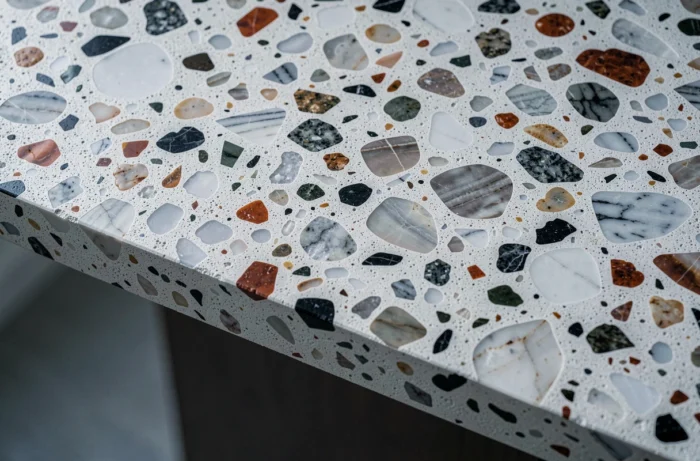
Terrazzo is making a strong comeback in interior decor. Pouring your own terrazzo top from cement and recycled glass shards or broken ceramic fragments transforms a basic piece of furniture into a decorative item. DIY tutorials are multiplying, and the materials remain accessible.
Each homemade terrazzo is unique by definition, as the distribution of shards varies with each pour. The result fits well in both minimalist interiors and more eclectic spaces.
7. Candle poured into a reclaimed stoneware container
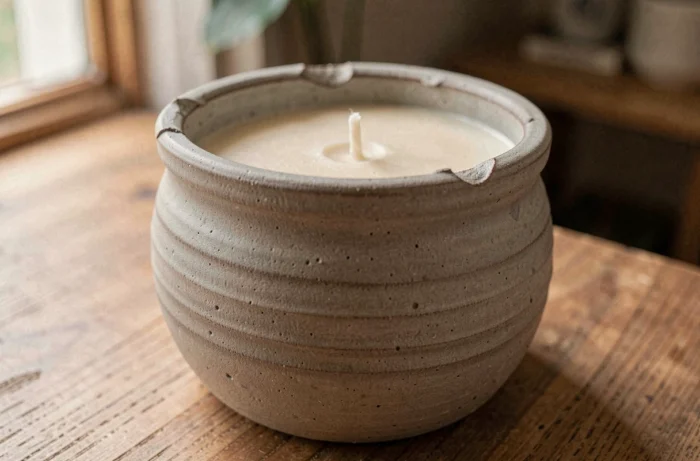
Industrial scented candles often use paraffin (a petroleum derivative) and disposable containers. Pouring a candle made of soy or rapeseed wax into a thrifted stoneware pot (an old jam jar, a chipped handmade bowl) creates a low-impact decorative object.
Once the candle is burned, the stoneware container regains a utilitarian or decorative function. This extended usage cycle illustrates a circular economy logic applied to decoration.
8. Wallpaper made of plant fibers (jute or sisal)
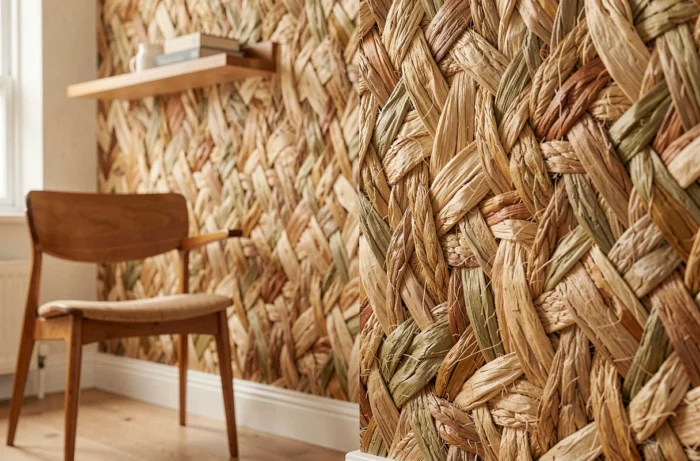
Jute or sisal fiber wallpapers offer a texture and depth that paint cannot replicate. When applied to a single wall, they visually structure a space without overwhelming the room. Plant fibers absorb some sounds, improving the acoustic comfort of an office or living room.
Their maintenance requires regular dusting with a soft brush. They do not tolerate humidity well, which limits them to dry rooms.
9. Expanded cork seating for poufs or stools
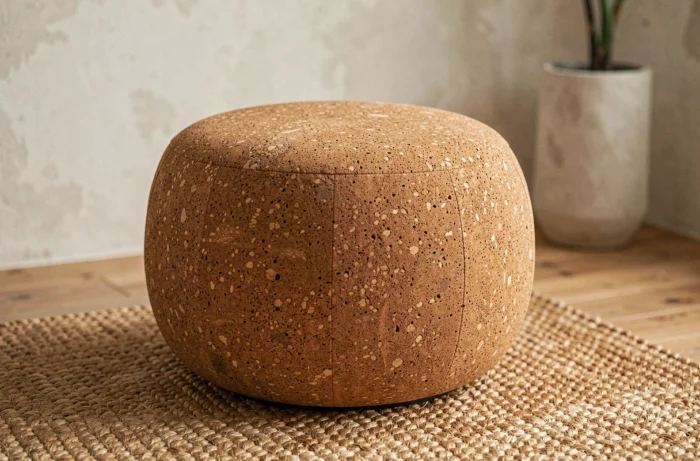
Expanded cork, sourced from the bark of the cork oak harvested without cutting down the tree, is lightweight, durable, and naturally antibacterial. Cut into blocks or molded, it serves as the structure for poufs or accent stools with a sleek design.
- Lightweight, making it easy to move in a small space
- Natural thermal insulation, pleasant to the touch even in winter
- Renewable material, as the bark regenerates approximately every nine years
Its grainy and warm aesthetic pairs well with light wood, linen, and terracotta tones.
10. Framed mirror with locally collected driftwood
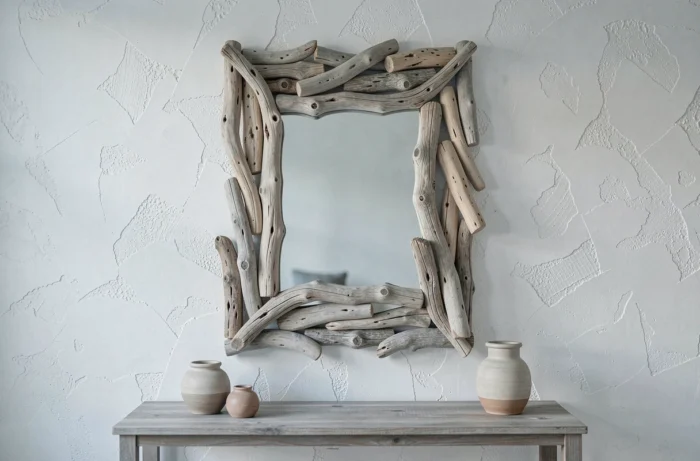
Driftwood collected from beaches or riverbanks costs nothing and has shapes that workshop work cannot replicate. Assembled around a simple mirror, it creates a sculptural decorative object that works well in both an entryway and a bathroom.
No chemical treatment is necessary: complete drying and light sanding are sufficient. Driftwood has already undergone a natural cleaning process by water and salt.
These ten ideas share a common point: they prioritize minimally processed materials, often available locally or through reuse channels. The 2026 trend confirms that earth palettes combined with raw materials constitute the aesthetic language of sustainable decor. Choosing just one of these elements is enough to change the atmosphere of a room without heavy renovation.