Which decor trends really deserve a rethink of your interior in 2026? Between the return of a warmer white, the emergence of deep shades like teal, and the decline of cold metallic finishes, this year’s choices create more enveloping interiors than previous seasons. This article compares the major directions in colors, materials, and finishes to identify those that truly transform a living room, kitchen, or bedroom.
Colors, materials, and decor finishes 2026: comparative table of trends
Before changing anything in your interior, a factual overview of the dominant trends helps distinguish micro-trends from underlying movements. The table below synthesizes the three structural axes of interior decoration in 2026.
| Axis | Rising trend | Declining trend | Impact on the interior |
|---|---|---|---|
| Base color | Warm and airy white (Cloud Dancer, PANTONE 11-4201) | Clinical white, concrete gray | Softer walls and ceilings, spacious feel without coldness |
| Accent color | Deep teal (Transformative Teal, WGSN/Coloro) | Terracotta used alone, saturated orange | Structuring contrast on a wall, a sofa, or accessories |
| Metal finishes | Brass, bronze, warm metals | Chrome, brushed steel, cold finishes | Lighting fixtures, kitchen handles, and table legs change register |
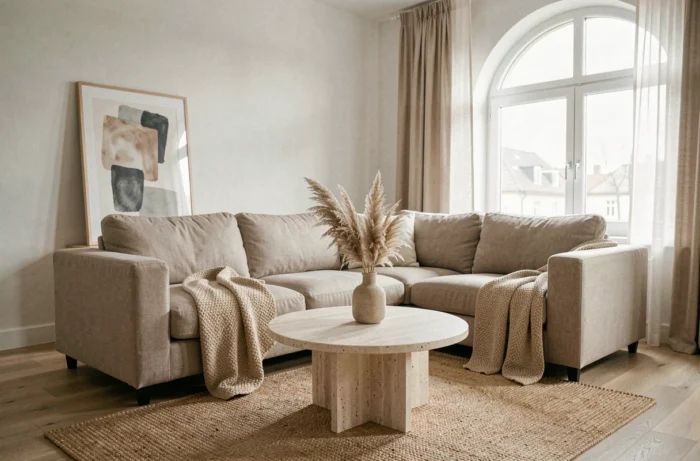
What stands out from this grid is the overall coherence. The three axes converge towards a warmer interior, where each choice of color or material reinforces the others. A living room that combines Cloud Dancer walls, a deep teal sofa, and a coffee table with brass legs illustrates this logic effortlessly.
If you are looking to extend this reflection with concrete proposals for furniture and objects, Les Embellies Déco’s decor ideas cover ranges that precisely follow these orientations.
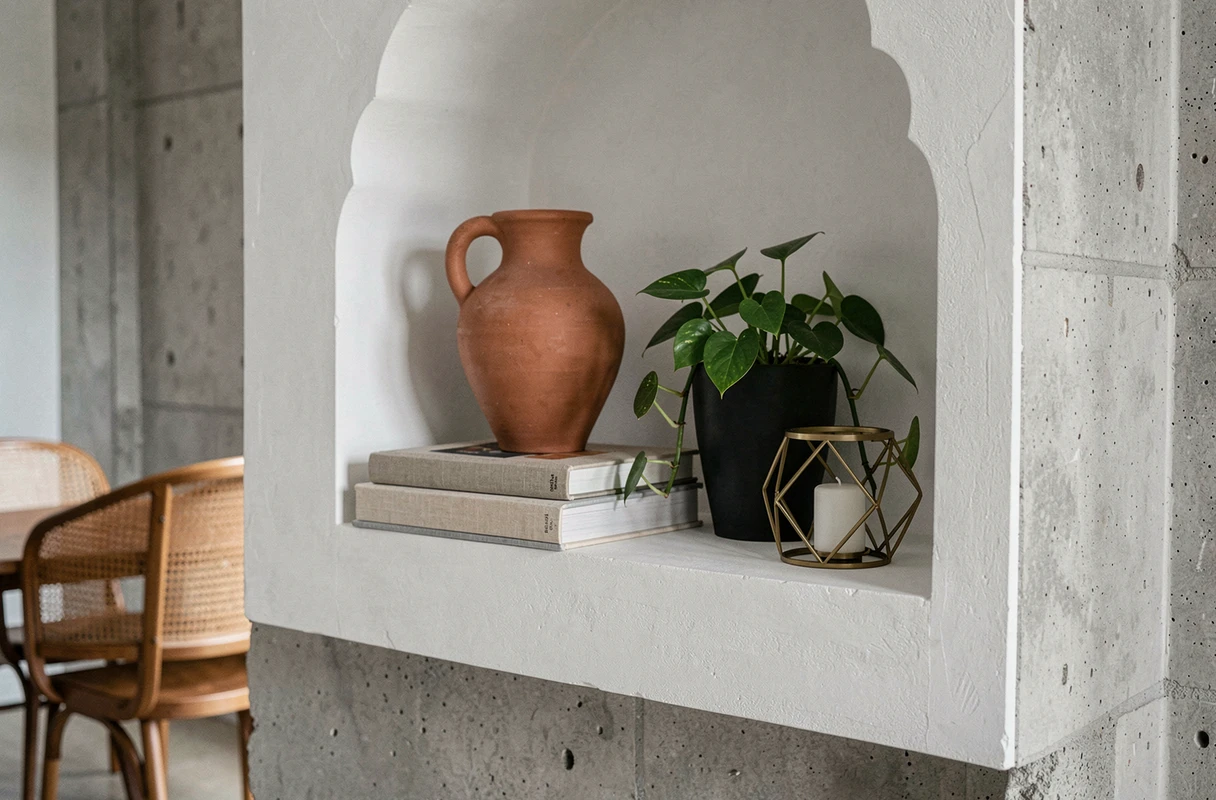
Cloud Dancer and Transformative Teal: two decor colors that change a living room
Pantone has designated Cloud Dancer (PANTONE 11-4201) as the color of the year 2026. This is not just another neutral white. Trend analyses describe a soft, warm, and airy white, in contrast to the clinical white that has dominated Scandinavian interiors for a decade.
In practice, this changes the choice of wall paints. A living room painted in Cloud Dancer better supports colorful textiles and light woods than pure white, which tends to create too harsh contrasts with furniture.
Deep teal as a structuring accent
WGSN and Coloro highlight Transformative Teal, a shade transitioning between blue and green. This color stands out from the earthy palettes (terracotta, beige, brown) that have saturated decor content for several years.
Its interest lies in its versatility. A deep teal velvet sofa works well in both a modern living room and a more classic styled space. However, when used on four walls, this shade risks darkening a modestly sized room. The most effective use remains a single accent wall or isolated pieces of furniture.
- On a living room wall, Transformative Teal creates visual depth without reducing perceived brightness if the other walls remain light
- In accessories (cushions, vases, curtains), this shade provides a focal point without long-term commitment
- Paired with brass, it produces a particularly readable warm-cool contrast in an open kitchen or a decluttered living space
Metal finishes in interior decoration: why brass replaces chrome
The shift in designers’ preferences towards brass and bronze at the expense of chrome is not just a matter of taste. It responds to the same warmth logic that guides color choices.
A brushed brass light fixture above a kitchen table produces a more golden reflected light than a chrome fixture. This detail alters the overall perception of the room, especially under artificial lighting in the evening.
Where to focus the change in finishes
Replacing all handles and light fixtures in an interior represents a significant budget. Designers working with these trends recommend prioritizing three points of visual contact:
- Hanging light fixtures in the kitchen and above the dining table, as they are at eye level
- Kitchen cabinet handles, which are the most touched and seen elements daily
- Visible table or sofa legs, which anchor the furniture in the new finish register
Changing three categories of elements is enough to alter the perception of an entire space. Faucets, outlets, and switches can follow at a later stage.
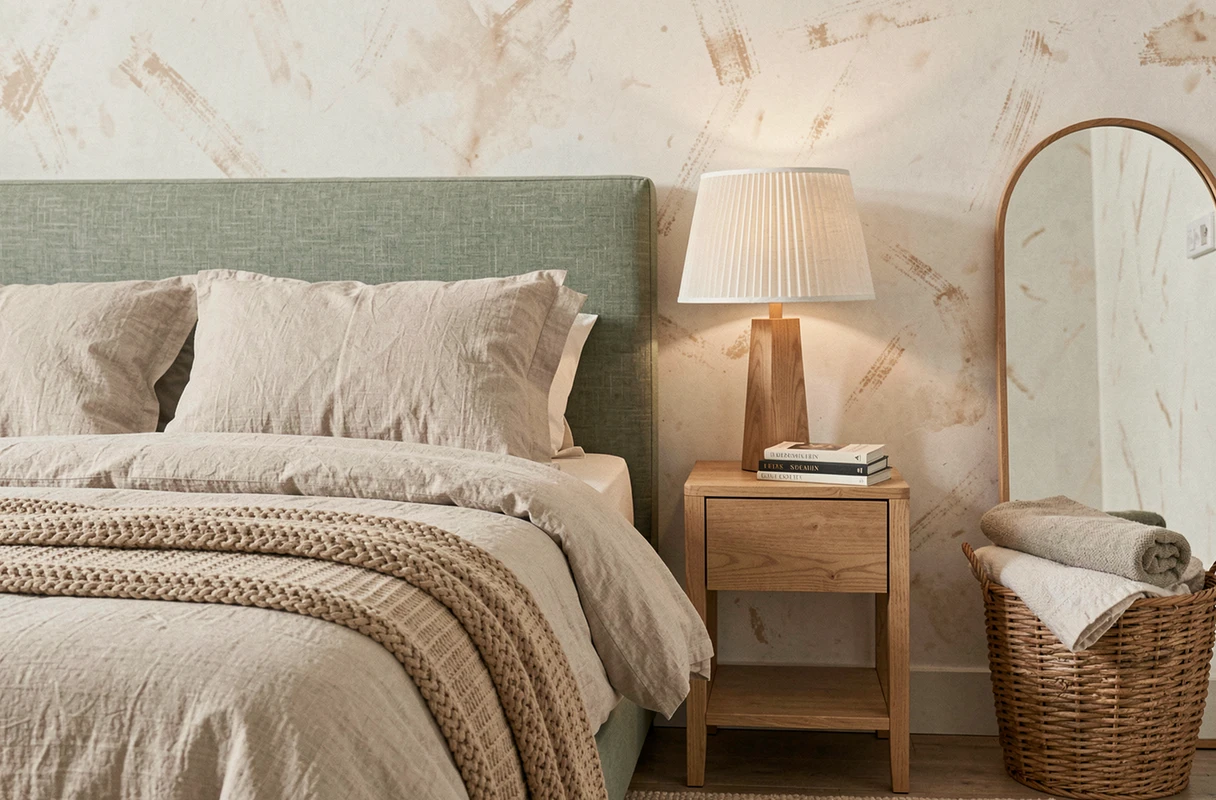
Invisible technology and decoration: adaptive lighting as a decor lever
The 2026 trends incorporate an axis rarely addressed in classic decor articles: invisible technology serving the interior ambiance. Adaptive lighting, integrated voice controls, and connected objects discreetly blended into the decor now contribute to the atmosphere of a space.
Adaptive lighting allows for a transition from cold, bright light during the day to warm, dimmed light in the evening, without changing bulbs or fixtures. Combined with brass finishes, this type of lighting reinforces the coherence of the warm register described above.
Conversely, an interior that relies on warm colors but retains cold white LED lighting at a fixed temperature creates a dissonance. Adaptive lighting corrects this mismatch between wall color and ambient light.
The criterion of discretion remains central. Visible boxes, exposed cables, or voice assistants prominently placed on furniture contradict the search for visual harmony. Built-in or integrated solutions correspond better to this requirement.
Interior decoration in 2026 can be summarized by a clear principle: every choice of color, material, and finish serves an overall coherence directed towards warmth. Cloud Dancer sets the tone for the walls, Transformative Teal structures the accents, brass unifies the metallic details, and adaptive lighting ensures that the light does not contradict the rest. Starting from this framework, rather than accumulating isolated decor ideas, yields more sustainable and coherent results.