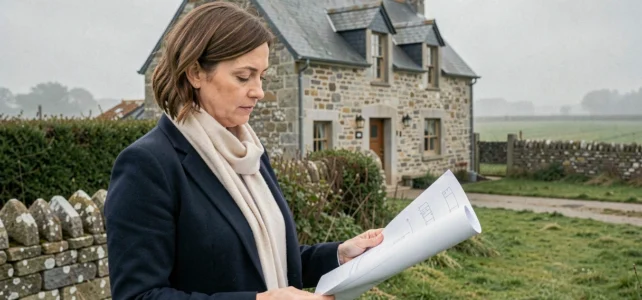
The Breton real estate market remains one of the most dynamic in the Atlantic arc, driven by steady population growth and prices that are still moderate compared to major French metropolitan areas. Investing responsibly in Brittany requires considering two perspectives: rental profitability on one side, and energy and environmental compliance on the other.
The regulatory framework stemming from the Climate and Resilience Law reshapes the rules of the game for landlords, and the region is not exempt from these constraints.
Rental Ban Schedule and Energy Performance Certificate (DPE): What the Climate Law Changes in Brittany
As of January 1, 2025, properties classified G on the DPE can no longer be rented for any lease signed, renewed, or tacitly extended. The next deadline falls on January 1, 2028, with the exclusion of properties classified F, and then on January 1, 2034, for class E.
For a Breton investor, these dates are not abstract. The older housing stock, predominant in the town centers of Finistère, Côtes-d’Armor, or Morbihan, contains a significant proportion of poorly insulated properties. Acquiring a property classified F or G at a reduced price to renovate it before the regulatory deadline is a common strategy, but it requires accurately estimating the cost of renovations before purchase.
A decree from July 6, 2026 (n° 2026-596) further reinforces this logic. Starting from October 1, 2026, the standard rental contract will include new mandatory mentions related to energy performance and the decency of the housing. The DPE, risks, pollution, and energy performance levels must be explicitly stated in the lease. Responsible real estate in Brittany thus first involves mastering this contractual framework.
Some specialized platforms allow filtering offers based on these energy criteria. To identify compliant or renovatable properties in the region, real estate on Breizh Equitable gathers listings focused on a responsible approach.
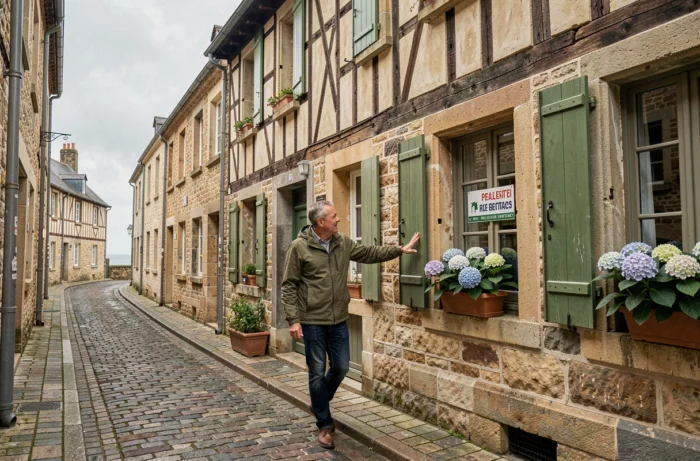
Energy Renovation in Brittany: Choosing Between New and Renovated Old
The choice between a new property compliant with RE2020 standards and a renovated older property affects both the initial budget and the long-term rental strategy. Both options meet energy decency requirements, but their risk profiles diverge.
New Housing: Guaranteed Compliance, Higher Entry Price
A new program delivered in Brittany automatically complies with the RE2020 environmental regulations. The DPE class is generally in A or B, which protects the investor from future regulatory restrictions for several decades.
The price per square meter for new properties remains significantly higher than that of older ones, which impacts gross yield. In Rennes or Vannes, this gap can reduce rental profitability to a modest level if the rent does not compensate for the acquisition cost increase.
Renovated Old: Higher Potential Yield, Real Renovation Risk
Acquiring a property classified E, F, or G in a medium-sized Breton town (Lannion, Morlaix, Pontivy) allows for a low purchase price. Energy renovation, if well executed, can raise the DPE to a compliant zone and enhance the property’s value upon resale.
Field feedback varies on this point: the actual cost of a renovation often exceeds initial estimates, particularly in older Breton stone or granite buildings, where interior insulation poses specific technical constraints. An energy audit before acquisition remains the most reliable precaution.
Responsible Rental Investment: What Criteria Beyond the DPE
Reducing responsible real estate to just the energy performance diagnosis would be limiting. Several additional dimensions deserve to be integrated into a selection framework.
- Location and Land Use Efficiency: prioritize town centers or already urbanized areas rather than suburban extensions. Brittany has a dense network of medium-sized towns, allowing investment without contributing to land artificialization.
- Materials and Local Supply Chains: some new Breton programs incorporate bio-sourced materials (wood, hemp, raw earth). These supply chains remain minority, but their presence in a program can be a rental and heritage argument.
- Mixed Use and Accessibility: a property close to public transport, shops, and public services reduces the tenant’s reliance on cars. In Rennes, the commissioning of the metro line B has already changed the map of attractive neighborhoods for investment.
These criteria do not appear in usual gross yield rankings. They do not mechanically improve short-term profitability, but they reduce the risk of rental vacancy and depreciation in the medium term.
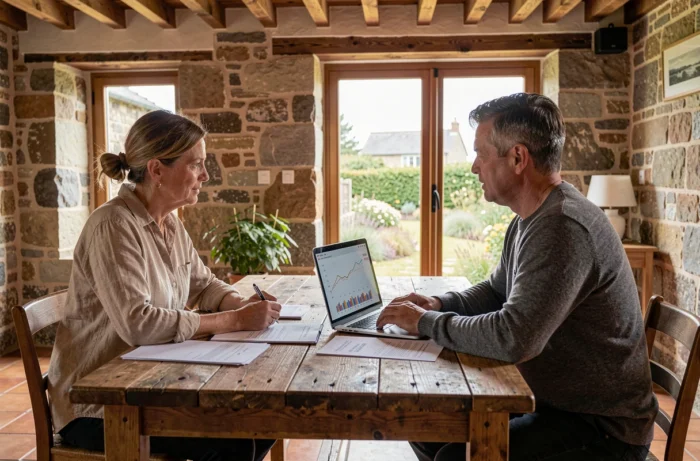
Tax Incentives and Sustainable Real Estate in Brittany: What Remains Effective
The end of the Pinel scheme, long used to direct investment towards new properties, has reconfigured tax considerations. Breton investors are increasingly turning to property deficit related to energy renovation works, which allows for the deduction of renovation costs from rental income, or even from global income under certain conditions.
The status of non-professional furnished landlord (LMNP) remains an option for properties located in Breton university towns like Rennes or Brest, where student demand supports occupancy rates. The choice between statuses depends on the amount of work, the level of rent, and the intended holding period.
Responsible real estate investment in Brittany is not just about ticking the box for a compliant DPE. The combination of thermal renovation, land-efficient location, and appropriate tax choice forms a triptych that each project must calibrate according to its own constraints. The regulatory timeline, however, leaves little room for buyers of unrenovated thermal sieves.