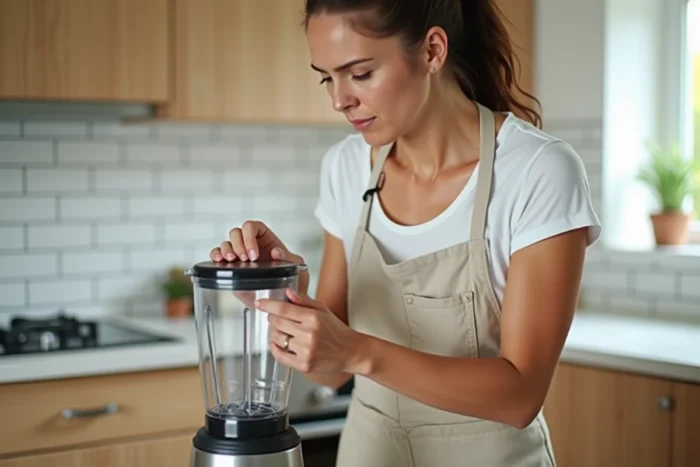
A blender bowl that refuses to detach from its base turns an ordinary action into a source of frustration. The blockage may stem from a stuck thread, dried food residue, or a misengaged safety mechanism. Understanding the precise cause of the blockage allows for the selection of the right unblocking method without damaging the device or compromising its compliance.
Thermal safety and locking: what really blocks the bowl
Recent blenders incorporate locking systems that prevent the motor from running if the bowl is not properly positioned. This device protects the user, but it can also become the cause of the perceived blockage: the bowl seems stuck when it is simply misaligned on its base.
Portable and compact models increasingly feature thermal safety mechanisms integrated into the motor. When forcing a poorly fitted bowl, the motor overheats and an automatic shut-off occurs. The device then appears to be malfunctioning, while it simply requires waiting for complete cooling before attempting to unblock it again.
If you are looking for a solution for a stuck blender bowl on a food processor or stand mixer, the locking mechanism is often different: a bayonet system replaces the threading, which alters the technique to be used.
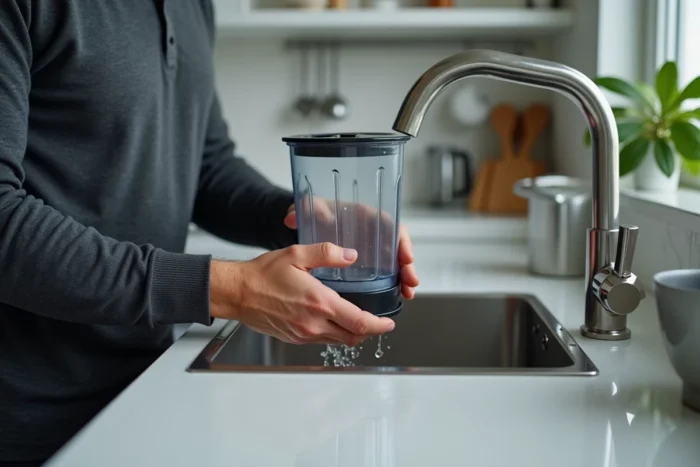
Causes of blender bowl blockage: comparative table
Not all blockage situations are handled the same way. The table below distinguishes the most common causes, their symptoms, and the appropriate method.
| Cause of blockage | Observable symptom | Unblocking method | Risk if forced |
|---|---|---|---|
| Dried food residue in the threading | The bowl turns slightly but does not detach | Pour soapy hot water around the threading, wait a few minutes | Crack in the plastic or glass bowl |
| Thermal expansion (hot liquid blended) | Immediate blockage after use | Let cool completely before attempting to rotate | Burn, breakage of the seal |
| Misalignment on the base (bayonet or cross-threading) | The bowl does not click in or gets stuck in an intermediate position | Gentle rotation in the opposite direction, repositioning | Damaged threading, parts to replace |
| Stuck or deformed sealing gasket | Strong and uniform resistance all around | Cooking oil on the gasket, gradual rotation | Tear of the gasket, leakage during the next use |
| Triggered thermal safety | Motor unresponsive after several attempts | Unplug the device and wait for complete cooling | Permanent damage to the motor |
In most cases, the blockage comes from residue in the threading or a gasket that adheres after a high-temperature dishwasher cycle.
Step-by-step unblocking method for a stuck bowl
Before any handling, unplug the blender. This reflex protects against accidental motor startup, especially on models where the bowl activates a safety sensor with simple pressure.
Hot water and cloth technique
Pour hot water (not boiling) around the base of the bowl, where it meets the base. The heat slightly expands the plastic or glass and loosens the grip of the threading.
Wrap a dry cloth around the bowl for better grip, then turn in the opposite direction of locking. Most blenders use standard threading: counterclockwise rotation to unlock the bowl.
When the sealing gasket sticks
If the resistance remains uniform throughout the rotation, the gasket is likely stuck. Apply a few drops of cooking oil (sunflower or canola) directly around the visible edge of the gasket.
- Let the oil penetrate for five to ten minutes before attempting to rotate again
- Use kitchen gloves for better grip if the cloth slips
- Avoid any metal tools between the bowl and the base: the risk of scratching the threading or cracking the glass bowl is real
European regulation: why you should not neutralize the locking mechanism
Some online tips suggest removing or bypassing the safety sensor to facilitate the bowl’s disassembly. Since the entry into force of the Regulation (EU) 2023/1230 on machinery, this practice exposes the user to a specific regulatory risk.
Any substantial modification of a device that could affect safety can make the user a “manufacturer” in the legal sense of the regulation. The user then inherits the same obligations as the original manufacturer: risk assessment, compliance, technical documentation.
In practical terms, neutralizing a locking sensor on a blender nullifies the CE compliance of the device. In the event of a domestic accident, the insurance may invoke this modification to refuse coverage. This point is often absent from most online troubleshooting guides.
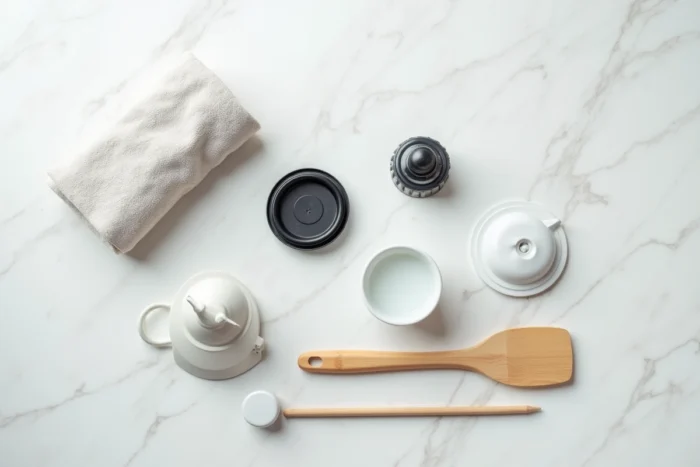
Spare parts and blender repair: when to replace rather than force
A recurring blockage often signals a worn part. The sealing gasket, the coupler (the plastic part that connects the bowl to the motor), and the base threading are the three components that wear out first.
- The sealing gasket deforms after repeated exposure to high temperatures or intensive dishwasher cycles
- The coupler shows worn grooves that prevent the bowl from properly engaging on the blade shaft
- The base threading accumulates micro-cracks invisible to the naked eye, making each locking more difficult
- For Magimix models or Kenwood Cooking Chef type food processors, spare parts are available through customer service or authorized dealers
Replacing a gasket or coupler costs a fraction of the price of a new bowl. Ordering the correct part requires the exact model number, usually engraved under the base or listed on the motor label.
A bowl that gets stuck every use despite careful cleaning of the threading indicates a mechanical problem that cannot be resolved with hot water. Replacing the defective part remains the only sustainable approach, and it preserves the compliance of the device.