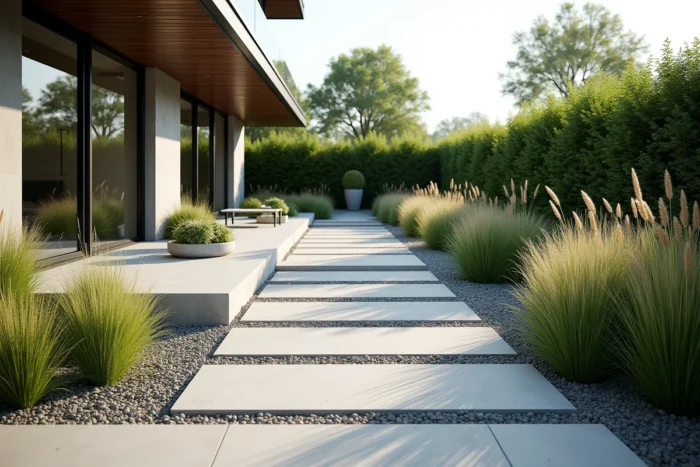
The modern contemporary garden relies on a precise vocabulary: geometric lines, raw materials, controlled vegetation. Since 2025, an additional factor has emerged in the design of these spaces: climate resilience. Watering restrictions, repeated heatwaves, and permeable soils require a rethink of every material and plant choice. Here are ten concrete ideas, rooted in current practices, for an outdoor space that keeps its promises over time.
1. Wide composite decking laid with staggered joints
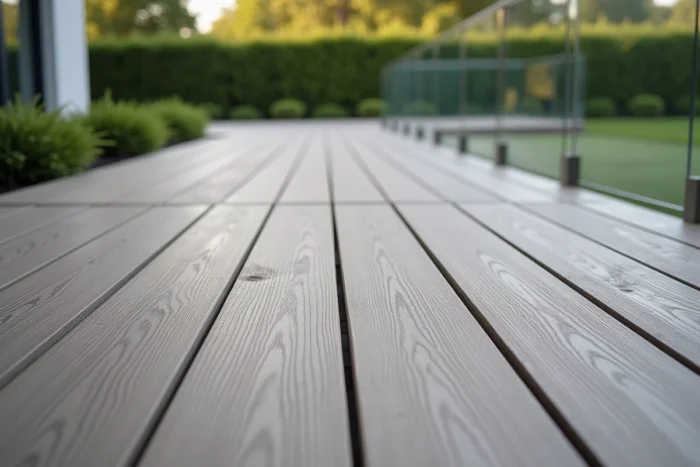
Wide composite boards provide a clear visual foundation for the garden. The staggered joint layout breaks the monotony of a strict alignment and creates a perspective that elongates the space.
Opt for gray or anthracite shades, consistent with a contemporary palette. Composites resist UV rays and require neither sanding nor annual oiling, reducing maintenance to a simple seasonal cleaning.
2. Rain garden integrated into the circulation plan
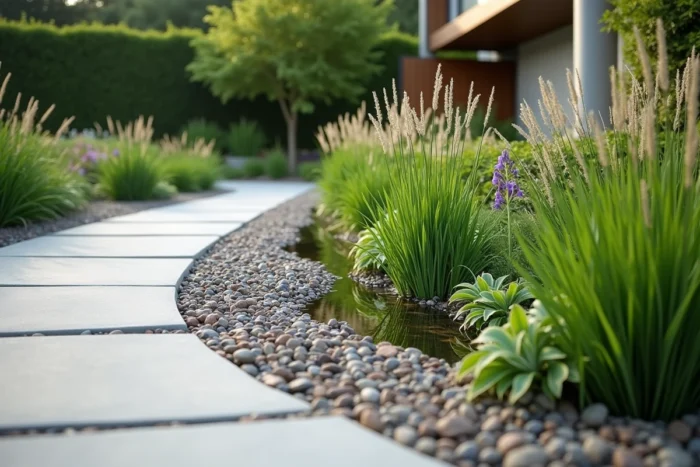
Recent projects for modern contemporary garden design increasingly integrate infiltration swales and rain gardens directly into the design. The principle: a slight depression planted with grasses and filtering perennials that collects runoff from the terrace or driveway.
This system replaces costly underground drainage. It adds subtle relief to the terrain and transforms water management into a design element. Field feedback varies on absorption capacity in clay soil, but on draining substrate, the result is reliable.
3. Molded concrete bench extending from a low wall
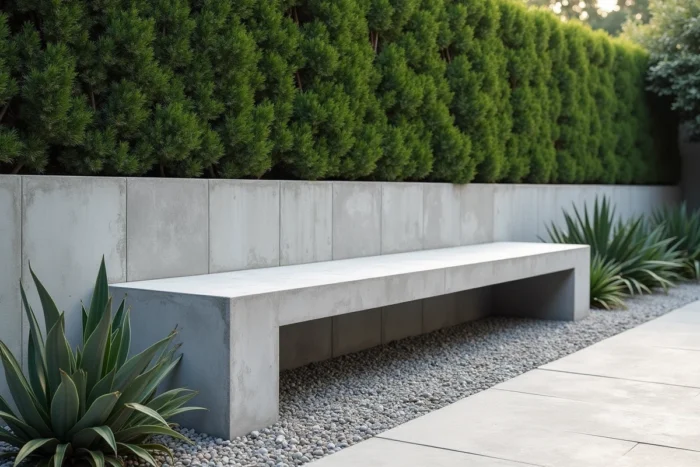
Fixed furniture made of mass-colored concrete eliminates the problem of winter storage. A bench cast in extension of a fence or retaining wall creates generous seating without cluttering the lawn.
The bush-hammered or smooth finish directs the style. Ultra-high-performance fiber-reinforced concrete (UHPC) allows for thin thicknesses, lightening the silhouette. Add removable outdoor cushions for comfort without compromising the line.
4. Ornamental grasses in mass as an alternative to lawn
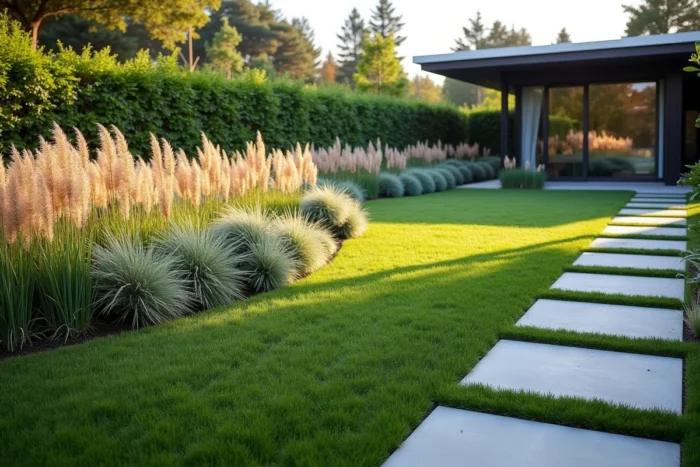
Miscanthus sinensis, Stipa tenuissima, Pennisetum: these grasses form moving carpets that enliven the garden without regular watering. They directly address the constraint of water restrictions, such as the prefectural decree from Haute-Garonne in 2026 that prohibits lawn watering between 1 PM and 8 PM.
Water-efficient grasses replace traditional lawn in non-trodden areas. Trimmed once at the end of winter, they provide a contemporary texture year-round with minimal intervention.
5. Low-voltage recessed lighting along the driveway
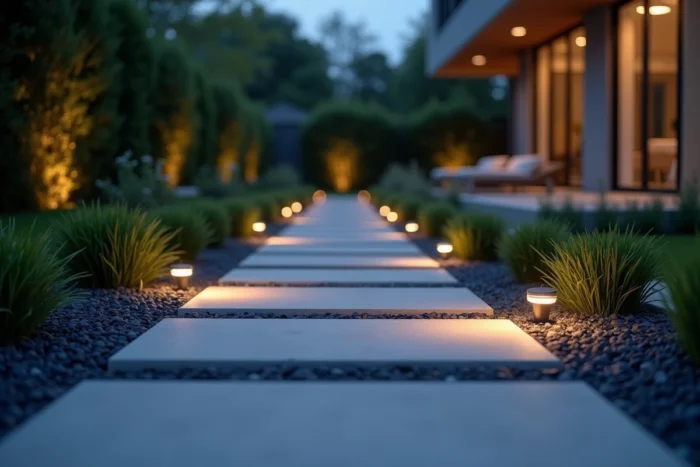
LED spotlights recessed into the ground or into the riser of a staircase outline the geometry of the garden at dusk. Low voltage (12 V or 24 V) simplifies installation and reduces consumption.
Choose a warm white color temperature (around 2,700 K) to avoid a parking lot effect. Low lighting highlights the textures of materials (stone, wood, concrete) much better than overhead floodlights.
6. Corten steel screen to structure areas without partitioning
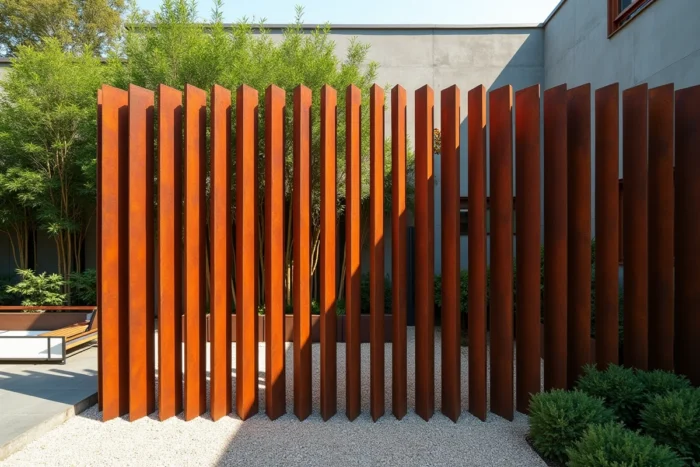
Corten steel develops a stable rust patina that naturally stops corrosion. A laser-cut screen filters views without closing off the space, which is useful for delineating a dining area or concealing a technical room.
The orange hue of Corten contrasts with the green of the plants and the gray of the concrete. It is a material that ages without maintenance, but it can stain light surfaces through runoff. Plan for a setback or a drain at the base of the panel.
7. Level play with tiered terraces
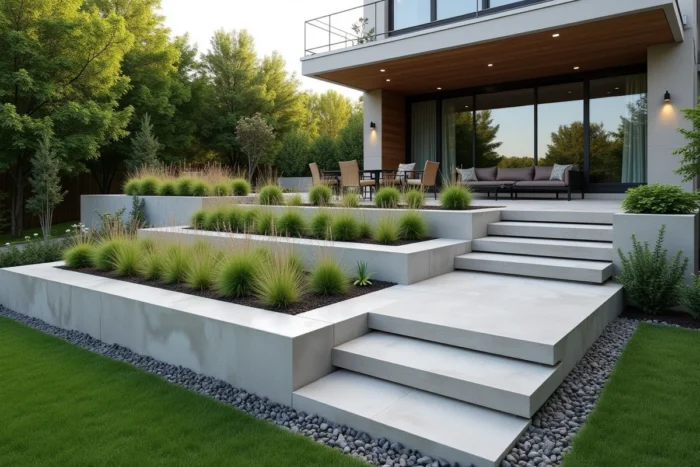
Structuring a garden with levels creates distinct functional areas without resorting to hedges or fences. A height difference, even modest, is enough to visually separate a dining space from a relaxation area.
Each level accommodates a different use: low lounge, elevated outdoor kitchen, planted bed below. Dry stone or gabion retaining walls reinforce the mineral vocabulary of the contemporary garden.
8. Permeable flooring with stabilized gravel
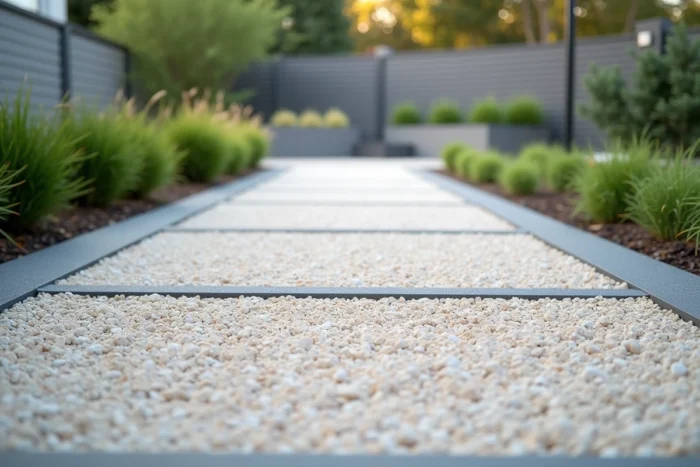
Cellular slabs (honeycomb) filled with crushed gravel provide a stable surface, accessible by wheelchair or wheelbarrow, while allowing water to infiltrate. This is a direct response to the imperative to reduce impermeable mineral surfaces that amplify heat islands.
Stabilized gravel comes in white limestone, black basalt, or gray schist. The choice of shade anchors the garden in a color scheme consistent with the facade and terrace.
9. Built-in gas fire pit in a coffee table
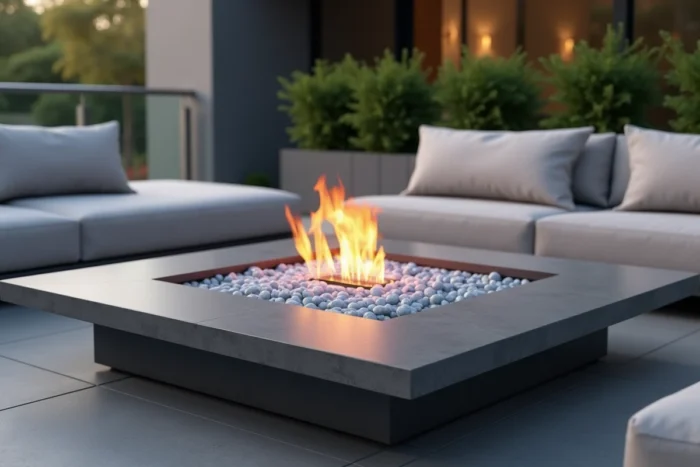
A linear gas burner integrated into a fiber-reinforced concrete or natural stone tabletop replaces the mobile fire pit. The flame remains low, protected from the wind, and the absence of smoke allows for installation near furniture.
This type of fire pit extends the use of the garden into the evening from spring onward. The connection to the natural gas network or to a propane bottle hidden in the base ensures long autonomy without recharging.
10. Buried rainwater harvesting coupled with drip irrigation
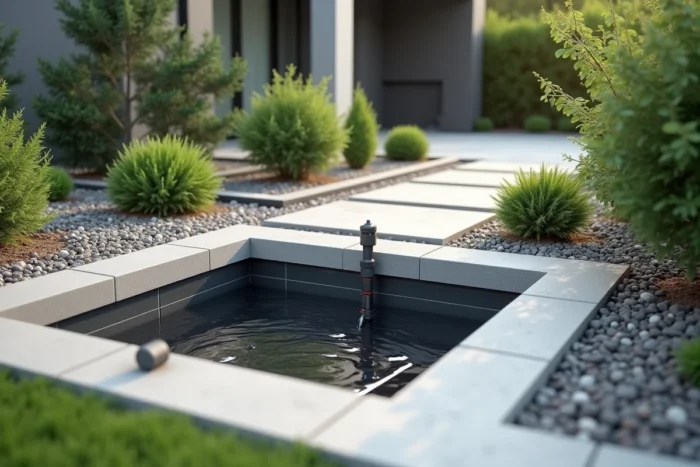
The buried tank fed by downspouts serves as an invisible reservoir that complements automatic watering. A timer connected to a drip network distributes water at the base of each plant, without waste.
Drip irrigation significantly reduces water consumption compared to a traditional rotating sprinkler. In a context where prefectural decrees increasingly limit allowed watering times, this system offers valuable regulatory autonomy.
The contemporary garden is now designed as much for aesthetics as for its ability to function under water constraints. Durable materials, water-efficient plants, and infiltration systems are no longer options: they condition the project’s sustainability.