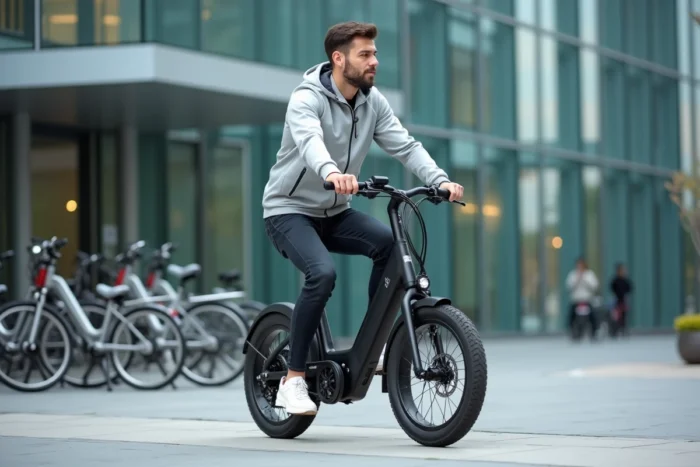
Are you looking for an electric balance bike for your daily commutes, and the Urban Glide 140 often comes up in recommendations? This model from UrbanGlide is positioned in an accessible niche, but the competition offers alternatives with sometimes very different features. Comparing these devices requires looking beyond the displayed price, particularly regarding the motor, battery, and regulatory status.
Pure propulsion and legal status: what changes everything for the electric balance bike
Before comparing technical specifications, it’s essential to understand a point that fundamentally distinguishes an electric balance bike from an electric assistance bicycle (EAB). On an EAB, the motor only works when you pedal, and it cuts off beyond 25 km/h. The balance bike, on the other hand, moves with pure propulsion, without pedaling.
This difference is not trivial. Under French law, a device with pure propulsion does not benefit from the same framework as a traditional bicycle. It is legally closer to a motorized personal transportation device, or even a moped depending on its power and maximum speed.
The practical consequences are direct: a specific civil liability insurance requirement, wearing an approved helmet, and restrictions on certain roads. When you compare the Urban Glide 140 to a balance bike of the EAB type for children or adults, you are not just comparing two machines but two distinct legal frameworks with different obligations.
To delve deeper into the technical differences between these models, you can learn more on abcsports.fr, which details the specifications of each competitor.
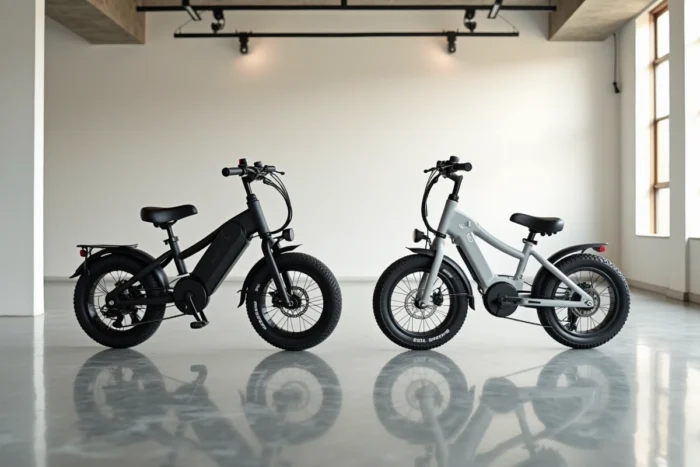
Urban Glide 140 versus competitors: motor, battery, and range
The Urban Glide Bike 140 is sold at a catalog price of 549.99 euros. At this price, UrbanGlide offers a package designed for stability and comfort in the city. Have you noticed that most comparisons simply list models without explaining what the numbers mean in everyday use?
Motor power and maximum speed
The motor power determines the balance bike’s ability to climb slopes and reach its cruising speed quickly. On flat terrain, the difference between two motors is hardly noticeable. However, as soon as a hill appears, an undersized motor forces the user to push with their feet, which diminishes the very purpose of the device.
The maximum speed of electric balance bikes sold in France is generally limited to stay within the legal framework. Therefore, comparing the speeds advertised by manufacturers makes little sense if all models adhere to the same limit. What matters is the responsiveness during acceleration and performance on inclines.
Real range and battery type
The range advertised by manufacturers corresponds to ideal conditions: flat terrain, light rider weight, moderate constant speed. In real use, with stops, restarts, and some climbs, the effective range decreases significantly.
Why is this detail crucial? Because a balance bike intended for several kilometers of commuting with an insufficient battery becomes a dead weight to push by hand. Check the battery technology (lithium-ion in most cases) and especially user feedback on real range, not just the catalog figures.
Concrete selection criteria for an urban electric balance bike
Beyond the motor and battery, several elements separate a pleasant balance bike from a regretted purchase after two weeks.
- The wheel size (expressed in inches) directly influences stability and comfort on degraded pavement. Larger wheels better absorb the irregularities of the asphalt and curb crossings.
- The total weight of the device affects its transportability. If you need to climb stairs or load the balance bike into a trunk, every kilogram counts.
- The braking system (mechanical or electronic disc) changes the stopping distance. In the city, with pedestrians and vehicles around, effective braking is not a luxury but a necessity.
- The quality of the saddle and the height of the steering column determine comfort on trips longer than ten minutes. A saddle that is too low or too hard quickly causes back pain.
UrbanGlide balance bike or electric scooter: which choice for which use
The question often arises: why choose a balance bike over an electric scooter, which is often cheaper? The answer can be summed up in one word: posture. On a balance bike, you are seated. On a scooter, you are standing.
This difference may seem trivial, but it becomes significant over a few kilometers. The seated position reduces fatigue in the legs and back. It also allows you to carry a heavy backpack without losing balance. For regular daily commutes, the balance bike offers superior comfort compared to the scooter over medium distances.
On the other hand, the balance bike is bulkier. It rarely folds as easily as a scooter and takes up more space in an apartment hallway or under a desk. The choice therefore depends on your typical route and storage constraints.
Maintenance and durability of an electric balance bike like the Bike 140
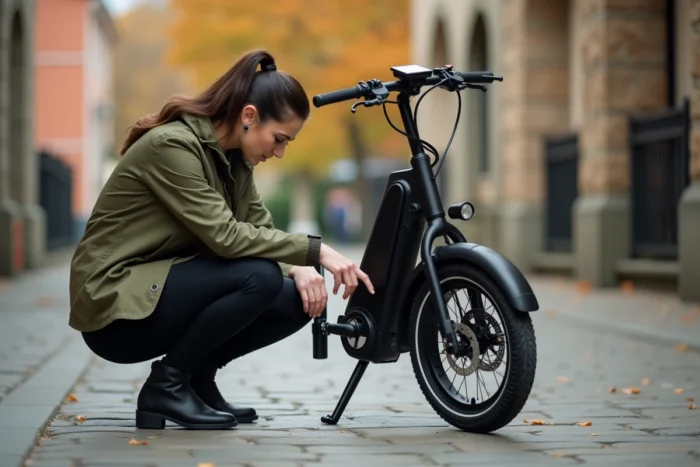
One point that product sheets rarely mention: ease of maintenance. An electric balance bike has wear parts (brake pads, tires, battery) that will need to be replaced.
- Check that spare parts are available from the manufacturer or third-party retailers. A model whose tires or controller cannot be found anywhere becomes unusable after a breakdown.
- The battery gradually loses capacity with charge cycles. A model with a removable battery makes replacement easier without sending the entire device for repair.
- User forums (like Esprit Roue) are full of feedback on possible modifications and repairs. Consulting this feedback before purchase avoids many disappointments.
The Urban Glide 140 benefits from an active user community that documents possible adjustments, which is an advantage over less established brands whose after-sales support remains vague. Choosing an electric balance bike also means choosing an ecosystem of parts and advice around the product.