
Political and societal news refers to all the facts, decisions, and debates that concern the governance of a country and the collective life of its inhabitants. In France, the 2026 back-to-school season focuses on several structural issues: budget restrictions, social reforms that came into effect in September, and tensions surrounding the 2027 presidential election.
Understanding these topics requires distinguishing reliable information channels, the mechanisms that create the media tempo, and the blind spots that continuous news flows leave in the shadows.
Sick leave: what changes in September 2026
General news portals dedicate most of their coverage to the battles between parties. Concrete regulatory changes often take a back seat even though they directly affect daily life.
Since September 2026, the time limitation on sick leave has tightened the regulations on prescriptions. A first sick leave is capped at 31 days, and a renewal at 62 days, except in specific medical cases. This measure alters the relationship between employee, treating physician, and employer, and fuels a debate on access to long-term care.
These changes affect millions of workers without always making headlines. To access the news from Les Patriotes, which covers both social reforms and partisan positions, simply check their dedicated feed.
Presidential election 2027: the campaign has already begun
The French political sequence is now structured around the 2027 deadline. Jordan Bardella, Marine Le Pen, Jean-Luc Mélenchon, Raphaël Glucksmann, Édouard Philippe: the most media-covered figures are increasing their appearances and statements since the start of the school year.

This climate of permanent pre-campaign blurs the line between government and opposition, with every statement being immediately interpreted through the lens of 2027.
Prime Minister Sébastien Lecornu faces an arithmetic challenge: to build a budget compromise while each camp hardens its positions as the election approaches. Several analysts note that this logic makes budget formulation nearly impossible without major concessions.
Immigration and security at the center of the debate
Immigration remains the most divisive topic. Marine Tondelier, representing the Ecologists, presents a discourse focused on climate transition, while other declared candidates emphasize security and immigration proposals.
These media sequences follow one another at a sustained pace. Understanding their real impact requires placing them in a broader context.
Social return 2026: climate, budget, and public services
The social return now articulates classic demands (salaries, status of agents, pensions) with a new requirement. Unions are calling for public services resilient to climate disruption, an angle that general political sections rarely address in depth.
- The demographic decline is reshaping the school map, the needs for teachers, and local budgets, as highlighted by the Council of Ministers on August 31, 2026.
- Union demands now include climate resilience among priorities, alongside purchasing power.
- The 2027 budget crystallizes a confrontation between deficit reduction and maintaining social spending, in a pre-electoral context that limits compromise margins.
Reliability of political information: sorting sources in real time
Following political news in real time is not just about opening a continuous news feed. The distrust of the French towards the media remains high, and the proliferation of channels (social media, news channels, podcasts, partisan sites) complicates sorting.
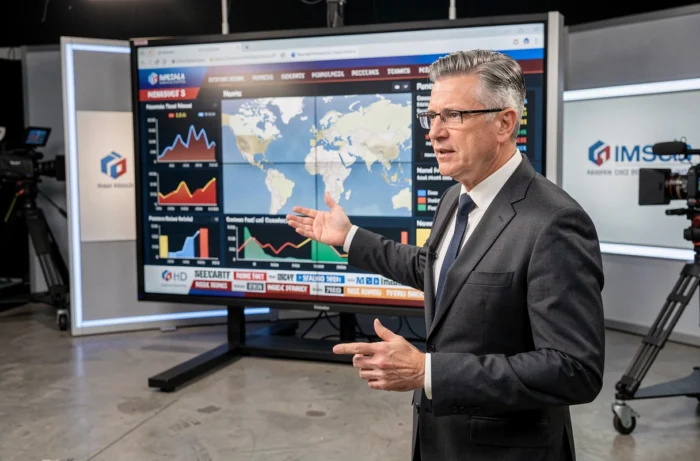
Several criteria can help assess the reliability of a source:
- The explicit separation between facts and opinions: an analytical article is not a factual report, and both have their place as long as they are identified as such.
- The traceability of information: a serious source refers to official texts (minutes of the Council of Ministers, Official Journal, parliamentary press releases).
- The treatment of substantive issues beyond the flow: regulatory reforms, school demographics, or budgetary decisions deserve as much attention as campaign soundbites.
The international context also weighs on the French political agenda. The war in Ukraine, relations with Russia, and Donald Trump’s policies in the United States fuel internal debates on diplomacy, defense, and energy supply. These topics cross all partisan divides.
The 2026 back-to-school season confirms an underlying trend: political news is read at multiple speeds. Continuous flow captures statements and controversies. Technical reforms, demographic changes, and budgetary decisions require a longer reading time. Cross-referencing both registers remains the safest way to avoid confusing media noise with the decisions that truly shape daily life.