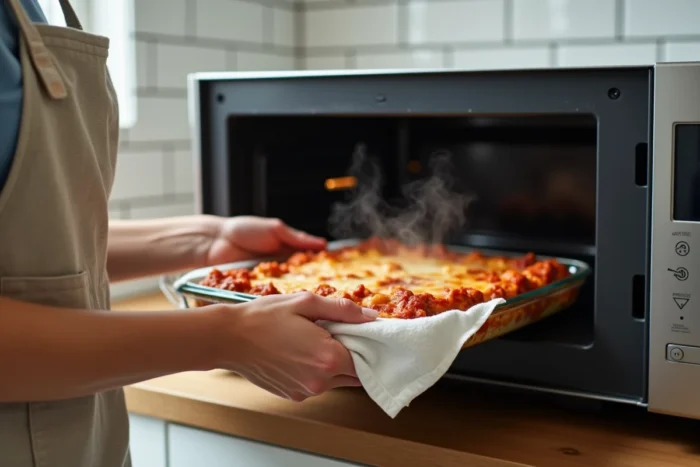
Reheated lasagna in the microwave presents a specific physical problem: microwaves penetrate the dish unevenly, causing rapid evaporation of water on the surface while the center remains lukewarm. The result is cardboard edges and a barely warm center. Reheating lasagna in the microwave without drying it out relies on three concrete levers: moisture management, arrangement on the plate, and power setting.
Ring Arrangement: The Geometry That Changes Lasagna Heating
The microwave does not heat evenly. The waves concentrate on the edges of the plate and struggle to penetrate thick food. Placing a large block of lasagna in the center of the plate guarantees a burning exterior and a cold interior.
The most effective technique is to cut the portion into smaller pieces and arrange them in a ring, leaving the center of the plate empty. This configuration allows the microwaves to reach each piece from multiple sides, reducing temperature discrepancies.
For an individual portion that would be a shame to cut, slightly shifting it towards the edge of the plate (rather than centering it) already produces a noticeable effect. The goal is to know how to reheat lasagna in the microwave by leveraging the physics of the appliance rather than fighting against it.
Damp Paper Towel: The Steam Trap That Protects the Surface
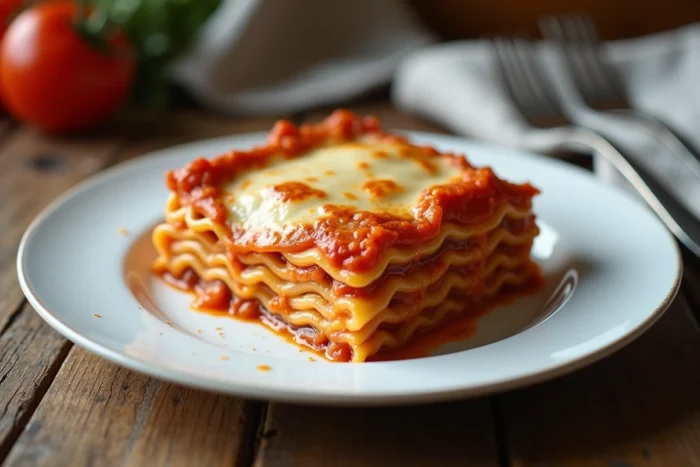
The drying out of lasagna in the microwave comes from the evaporation of water contained in the béchamel and tomato sauce. This water escapes into the oven without a chance of return. The cheese browns, and the pasta hardens.
A slightly damp paper towel placed on top of the dish creates a localized steam barrier. The water from the paper evaporates first, maintaining a humid microclimate around the lasagna throughout the reheating process.
Paper Preparation Method
- Wet a paper towel under the tap, then wring it out firmly so that it is damp but not dripping
- Place the sheet directly on the surface of the lasagna, conforming to its contours
- Remove the paper as soon as reheating is complete to prevent it from sticking to the softened cheese
This technique works better than a pierced plastic wrap, as the paper absorbs and releases moisture gradually. The wrap, on the other hand, traps steam but creates condensation that falls in droplets, making the top soggy in places and dry in others.
Reduced Power and Pauses: Reheating Lasagna Without Cooking It Again
Most users set the microwave to full power for two or three minutes. The result is predictable: the sauce boils on the surface while the center of the pasta remains compact and cold.
Reducing the power to about half of the maximum capacity radically changes the outcome. At moderate power, the waves heat more slowly, allowing time for the heat to conduct to the center of the dish.
Interval Reheating
Rather than a continuous cycle, splitting the reheating time into two or three short intervals, separated by a pause, allows the temperature to equalize. During each pause, the heat accumulated on the surface naturally migrates to the center of the portion.
- Start with a first interval at medium power, then open the door and let it rest for about a minute
- Check the temperature in the center by touching the bottom of the plate (if it’s hot, the center is reached)
- Restart a second shorter interval if the center remains lukewarm, still at reduced power
- Add a small spoonful of water or tomato sauce on top before the second round if the surface starts to pull
Adding a bit of liquid between two rounds compensates for the water already evaporated and restores moisture to the upper layers of pasta. A teaspoon of tomato sauce, broth, or even water is enough for an individual portion.
Frozen Lasagna in the Microwave: Defrosting and Reheating in Two Steps
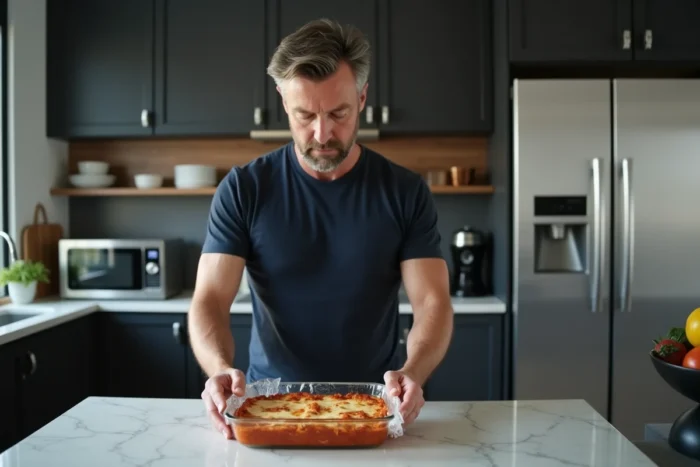
Reheating lasagna taken straight from the freezer at normal power produces the worst scenario: the outside cooks while the inside remains frozen. Ice crystals melt into water, which evaporates immediately, leaving the portion both dry and cold in the center.
Separating defrosting from reheating avoids this problem. The microwave’s defrost function (very low power) melts the ice slowly, without starting to cook the edges. Once the lasagna is evenly defrosted, reheating at medium power using the interval method described above yields a uniform result.
If the microwave does not have a dedicated defrost function, manually setting the power to the minimum and extending the time produces a comparable effect. The damp paper towel remains useful at this stage, as it prevents the surface from drying out during the defrosting phase.
The Role of the Container in Microwave Reheating
A often-overlooked detail: the material of the plate or dish influences the quality of reheating. Ceramics and stoneware retain heat better than fine glass or plastic, which prolongs thermal diffusion during pauses between intervals.
A slightly preheated ceramic dish (a few seconds empty in the microwave) acts as a heat reservoir from below. The bottom layer of pasta, usually the last to heat, benefits from this additional heat source.
The shape of the container also matters. A wide and shallow dish exposes more surface to the waves than a narrow and tall bowl. For a portion of lasagna, a standard flat plate yields better results than a deep container.
The difference between properly reheated lasagna and a dried-out portion rarely lies in the appliance itself. It comes down to three simple actions: reduce the power, maintain surface moisture, and allow heat to diffuse between passes. The microwave does the work, as long as you give it the time to do so.