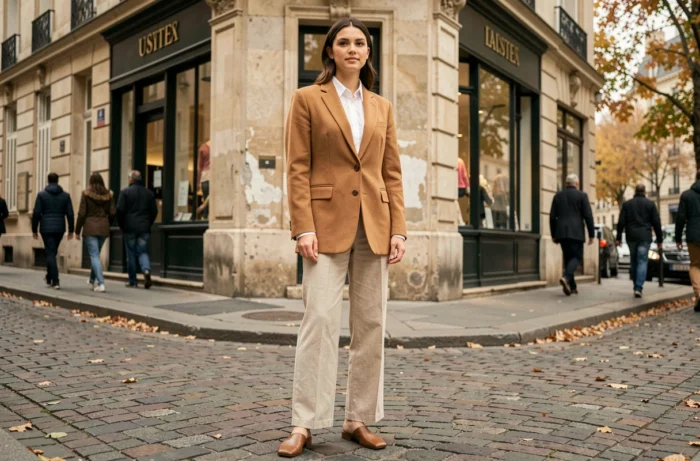
The autumn-winter 2026/27 season reshapes the lines of the women’s wardrobe with bold choices on the runways and, behind the scenes, a European regulatory framework that alters market conditions. Two dynamics to be read in parallel to understand the fashion trends that truly matter this season.
European Regulation and Impact on Autumn-Winter 2026 Collections
The regulation ESPR (EU) 2024/1781 prohibits large companies from destroying unsold textiles as of July 19, 2026. In practice, this mechanically reduces the depth of ranges and pushes brands to calibrate their production volumes more accurately. Massive end-of-line sales, often sold through clearance channels, become a financial and legal risk.
Another regulatory lever: the directive (EU) 2024/825 stipulates that as of September 27, 2026, unproven generic environmental claims will be banned in the European Union. A “responsible collection” label without verifiable data will now be subject to sanctions. We are already observing a decline in “eco” capsules lacking traceability in favor of more technical mentions on product sheets.
The Digital Product Passport, set to become mandatory in textiles starting in 2027, already requires brands to work on data structuring. Composition, country of manufacture, carbon footprint: this information must accompany each item. The fashion trends of this season can also be viewed through this lens, where we find on the fashion page of News Quirk complementary analyses on these sectoral changes.
Autumn-Winter 2026 Color Palette: Brown and Paprika Replace Black
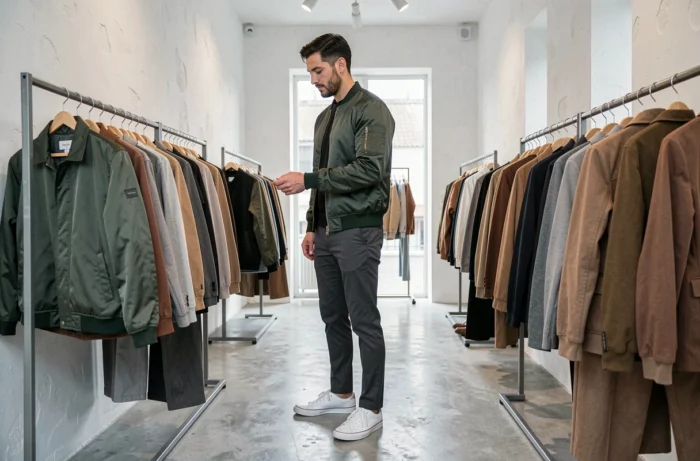
Brown emerges as the dominant color of the season. From intense chocolate to cappuccino and mocha shades, it replaces black in structural pieces (coats, suits, pleated trousers).
Burnt paprika establishes itself as the season’s confidential neutral. This dark terracotta tone works in a total look or as an accent on a single piece. It replaces the more orange terracotta of previous seasons with a more muted, urban rendering.
Off-white and cream maintain their place, worn this time in winter layering rather than as summer pieces. The result: tone-on-tone looks where texture takes precedence over color contrast.
Colors to Prioritize in a Seasonal Wardrobe
- Chocolate brown to mocha on structural pieces (jacket, wide trousers, coat) to replace black without losing sobriety
- Burnt paprika as an accent, ideally on a knit or accessory, to add warmth without saturating the silhouette
- Dense off-white on textured materials (boiled wool, ribbed cashmere) to avoid the “too light” effect in mid-winter
Dark Romance and Dark Tailoring: Stylistic Codes for Autumn-Winter 2026
Dark romance dominates the autumn-winter 2026 runways. Visible black lace, deep velvet, controlled transparencies: the aesthetic borrows from the boudoir wardrobe without tipping into lingerie. Houses position these pieces for daytime, paired with strict tailoring to break the lingerie effect.
Tailoring itself is evolving. British inspiration (structured shoulders, prince of Wales patterns, fine stripes) takes precedence over the oversized deconstructed blazer that has ruled for several seasons. Cuts tighten at the shoulders, lapels elongate, and materials gain structure.

Structured Layering Rather Than Loose Layering
We recommend keeping an eye on the return of calculated layering. Shirt under a fine sweater under a fitted jacket: each layer remains visible and contributes to the silhouette. Bulky and random layering gives way to a stacking where each layer of fabric has a precise visual function.
Faux fur, already present last season, is worn this time as a short piece (bolero, removable collar) rather than a long coat. The volume concentrates on the upper body to balance out the structured wide trousers that remain a pillar of the wardrobe.
Materials and Textile Construction: What Changes This Season
Heavy knits are gaining ground. Oversized sweaters in thick merino wool, button cardigans in ribbed knit: knitwear is no longer confined to casual. It enters dressed looks, worn under a short trench or a tailored jacket.
Lace is leaving the exclusively festive realm to settle into everyday wear. Lace tops worn with barrel jeans, lined lace skirts paired with flat ankle boots: the treatment is deliberately casual.
Corduroy and plush return on structural pieces. Trousers, short jackets, even some shoes adopt this material that provides immediate visual relief. The challenge for brands, in an ESPR context, is to source these materials with documentable traceability.
- Thick knit (merino, blended cashmere) worn as a main piece rather than as a base layer, including in dressed contexts
- Lace used outside of occasions, paired with raw basics for a contrast of styles
- Velvet (corduroy or plush) on structural pieces, with a marked return of brown and olive green velvet
The autumn-winter 2026 season marks a turning point where European regulatory constraints weigh as heavily as the aesthetic directions of the runways. Brands that anticipate the digital product passport and adjust their production volumes will have a concrete advantage, not only in compliance but in credibility with an increasingly discerning clientele attentive to the traceability of the pieces they purchase.