
Improving your interior and maintaining your home relies less on the amount of time invested and more on the relevance of the actions taken. A well-maintained home combines three dimensions often treated separately: the quality of the air breathed, the choice of products used, and the organization of living spaces. Understanding how these dimensions interact allows for greater efficiency without multiplying efforts.
Indoor air quality: a maintenance issue often overlooked
Most guides dedicated to home maintenance focus on visible surfaces. However, the air you breathe in each room deserves as much attention as the cleanliness of a countertop.
In France, monitoring indoor air quality has become a structured regulatory topic since the decrees of December 27, 2022. These texts impose, among other things, an annual assessment of ventilation means, a self-diagnosis every four years, and measurement campaigns concerning formaldehyde, benzene, and CO₂ at certain stages of the building’s life.
These obligations primarily target establishments receiving the public, but they raise the standards for residential ventilation. As part of RE2020, new constructions are subject to a “ventilation assessment” that checks minimum air flow rates. For older homes, ensuring the proper functioning of your mechanical ventilation system remains the most cost-effective maintenance action from a health perspective.
Several articles available on the home section of Veridictus detail concrete approaches to adapt these principles to different housing configurations.
Household cleaning products: prioritize sustainable formulations
The choice of a cleaning product has a direct impact on indoor air quality and on the wear of materials. An overly aggressive detergent damages tile joints, while a scented spray releases volatile organic compounds into the room you just “purified.”
The market for cleaning products is driven by a growing demand for sustainable solutions: biodegradable formulations, refillable packaging, concentrated formulas. In France, “green” scrubbing products are rapidly gaining market share, supported by regulatory pressure on hazardous substances and national goals for reducing plastics.
Criteria for choosing an appropriate cleaning product
Before filling a cupboard with specialized bottles (one for each surface, one for each room), applying a simple selection grid reduces both expense and clutter.
- The concentration of the product: a concentrated formula to dilute generates less plastic waste and costs less per liter of use than a ready-to-use spray
- Compatibility with your surfaces: an acidic cleaner (white vinegar, descaler) attacks marble and natural stone, while an alkaline product is unsuitable for aluminum surfaces
- The absence of synthetic fragrances: fragrances mask odors without eliminating them and add volatile compounds to the air in your living space
- The refillable format: opting for a durable bottle with soft pouch refills reduces the amount of plastic used
Three or four well-chosen multipurpose products cover nearly all maintenance needs of a home, from the kitchen to the bathroom.
Coatings and furniture: adapt maintenance to the material
Oiled parquet does not clean like laminate. A fabric sofa does not require the same actions as full-grain leather. Adapting the method to the material extends the lifespan of the furniture and avoids costly repairs.
Floors: parquet, tiles, and laminate
Solid or engineered wood floors do not tolerate standing water well. A cleaning with a wrung mop, using a neutral pH soap, is sufficient for regular maintenance. Laminate tolerates even less humidity: joints swell irreversibly if water seeps in.
Tiles may seem more resistant, but their cement joints absorb greasy stains. Regular cleaning with a slightly alkaline product preserves their color without weakening them.
Wood and textile furniture
Dust is the primary enemy of wooden furniture: its particles act as a mild abrasive with each wipe. A dry microfiber cloth, used before any product, limits this risk. For upholstery fabrics, a vacuum cleaner equipped with a soft brush, used every two weeks, delays graying and reduces the presence of allergens.

Ventilation and humidity: two parameters linked to the condition of the building
An excessively high humidity level promotes mold, degrades paints, and causes persistent odors. Conversely, overly dry air weakens wood and irritates the respiratory tract.
A well-maintained mechanical ventilation system is the first line of defense against excessive humidity. The extraction vents in the kitchen and bathroom should be dusted at least twice a year. Insufficient airflow is easily detected: place a sheet of paper against the extraction vent. If it does not stick, the airflow is too low.
- Clean the filters and vents of the mechanical ventilation system every six months to maintain sufficient airflow
- Ventilate each room for about ten minutes a day, even in winter, to renew the air without cooling the walls
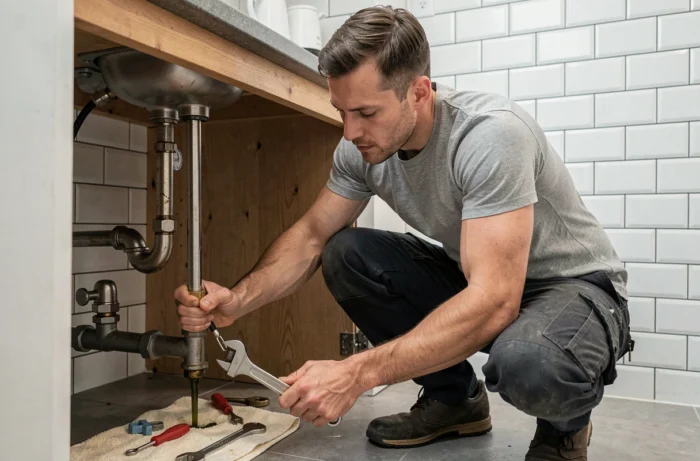
- Monitor at-risk areas (behind furniture pressed against an exterior wall, under the sink) where condensation accumulates without being visible
In older homes without mechanical ventilation, occasional solutions like an extractor fan in the bathroom or ventilation grilles in woodwork significantly improve air renewal.
Maintaining a home is not just a list of weekly household tasks. Ventilation, product choice, and respect for materials form a coherent whole. A home with properly circulating air, cleaned with products compatible with its surfaces, ages better and costs less to maintain over time.